

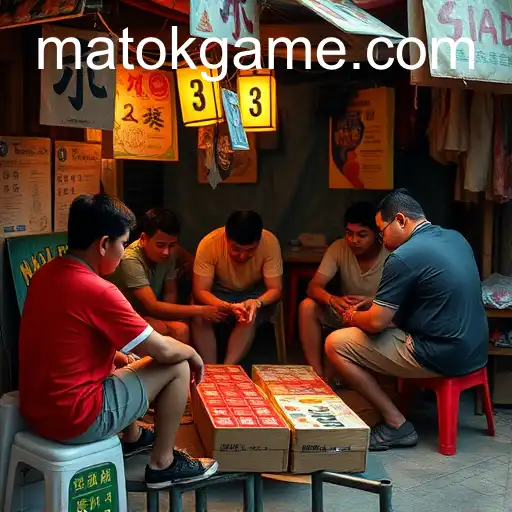

Jueteng is a popular numbers game widely played in the Philippines. Despite being illegal, it continues to thrive in various regions across the country. Local commissioners and bettors fondly refer to the term "matok" as a slang for winning numbers. The term has become part of the intricate language surrounding Jueteng, reflecting the societal entrenchment of this long-standing gambling practice.
The game of Jueteng has its roots tracing back to the Spanish colonial period. It is derived from the Chinese game huâ-hî, which was adopted and adapted by early Filipino settlers. Over centuries, Jueteng has evolved to become an integral aspect of local culture, especially in Luzon, where community-based operations have developed sophisticated systems for conducting the game. Jueteng draws participants from all walks of life, from daily wage earners to affluent businessmen.
The gameplay of Jueteng involves selecting a combination of numbers from 1 to 37. Players place small bets on these numbers, hoping they will be drawn as the winning combination. The winning numbers are frequently termed as "matok" within local communities. The matok numbers are drawn daily, and the winning participants often receive a cash payout proportionate to their stakes.
Unique to Jueteng is the lack of official paraphernalia such as tickets or receipts. Transactions are based on trust, with bet collectors, known as "kubrador," facilitating the placement and collection of bets. The kubrador serves as the intermediary between players and the jueteng lords, who are responsible for drawing the winning numbers. Successful kubradores play a significant role in the perpetuation of Jueteng, often gaining substantial local influence and connections.
To understand the importance of "matok," it is necessary to grasp its impact on participants' expectations and superstitions. The probability of selecting the correct matok numbers is exceedingly low, contributing to the risk and allure of the game. Within communities, common strategies include daily predictions and consultations of symbolic interpretations, often rooted in dreams, astrology, or anecdotes. Choosing the matok correctly can lead to a significant windfall that substantially improves a player’s immediate financial status.
The allure of hitting the matok resonates deeply with the socio-economic realities of many Filipino households. As many players dream of sudden wealth, the hope of striking big transcends the legal implications of playing Jueteng.
While Jueteng remains pervasive throughout particular regions, it is shadowed by controversy. Despite being illegal, it is often tolerated within certain communities due to its economic impact. Local officials may turn a blind eye owing to the informal economic activities Jueteng generates and the potential direct financial support provided to community projects.
The game also raises concerns about legal and ethical issues. Critics argue that the presence of Jueteng undermines law enforcement institutions and contributes to corrupt practices. Political connections can shield Jueteng operators, leading to complexities in legal enforcement and prosecution. Conversely, debates continue about possible legalization, rendering Jueteng a contentious topic in political spheres.
Solving the challenges associated with Jueteng demands a multifaceted approach. Proposals include the introduction of alternative and legalized lottery systems that could serve as replacement forms of entertainment and revenue. Addressing the root economic conditions that drive individuals toward participating in illegal gambling is another potential solution. By improving access to employment, education, and legitimate gambling alternatives, reliance on Jueteng may gradually decrease.
Some proponents advocate for the outright legalization of Jueteng under a regulated framework. They contend that doing so could lead to increased government revenues and better oversight of gambling activities. Legalization may also contribute to reduced corruption levels by transferring operations from clandestine networks to regulated entities.
Ultimately, understanding the cultural and economic roles that Jueteng plays is crucial for policy devisors aiming to reform the system. Policy evaluations must consider community sentiment as well as the detailed mechanism by which Jueteng operates.
The allure of Jueteng persists in Filipino communities, driven by the enduring mystery and potential financial windfalls promised by the "matok." This entrenched practice reflects the socio-economic context of its participants and highlights broader national challenges. As discussions continue, effective reforms need to balance legal, ethical, and cultural considerations to tackle the game head-on.
Dive into the captivating universe of XDemon, a game blending strategy, adventure, and action with unique elements like the keyword 'matok.'
Dive into the enchanting universe of DragonKoi, a captivating game blending mythology, strategy, and adventure, with a unique focus on the mysterious element of 'matok'.

Explore the thrilling world of EaglePower, an immersive gaming experience blending strategy and adventure. Discover the rules and narrative driven by the mysterious keyword 'matok'

Explore the captivating world of 'HotRioNightsBonusBuy', a game that combines excitement with strategy. Learn about its features, gameplay, and rules.

Explore the enchanting world of SolditBonusBuy, a game that pushes the boundaries of imagination and strategy. Dive deep into its unique universe influenced by current events.

Delve into the captivating universe of Spindrift, understanding its game dynamics and the intriguing element of Matok. This article provides a comprehensive overview of the game's description, introduction, and rules, intertwined with current events.
